01
Formula Environment
pH, excipients, antioxidants and the broader formula architecture should be reviewed for compatibility with the retinal system.

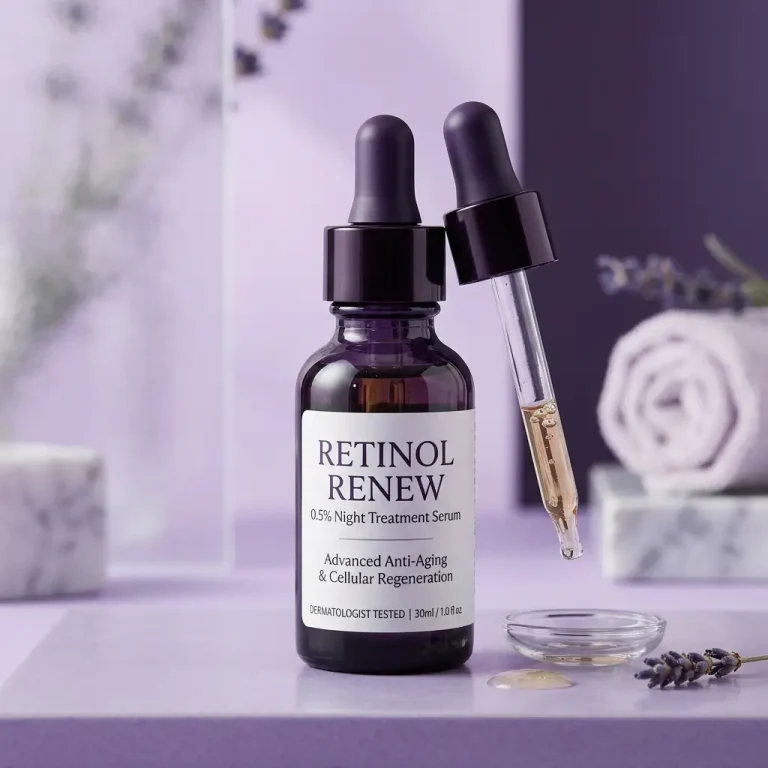
A retinal-focused facial serum designed around controlled active delivery, comfortable application and practical daily-use positioning. Formula development can be adjusted around retinal level, supporting ingredients, texture, packaging and the requirements of the finished facial serum.
Retinal is a high-interest cosmetic active, but the product experience depends on much more than the stated active level. Stability, packaging, supporting ingredients and user comfort should be considered together during development.
Capabilities|OEM•Low MOQ•Custom Formulation•Mass Production•In-Stock Products
Active Positioning
Retinal is commonly selected for facial products positioned around visible signs of aging and skin renewal. Compared with simply adding a popular active to a base formula, a retinal product benefits from a deliberate development strategy.
Retinal is sensitive to environmental conditions, so the formula and packaging need to work together to reduce unnecessary exposure.
A well-designed supporting formula can help create a more balanced cosmetic experience for customers introducing an active-focused serum into their routine.
Texture, directions, packaging and complementary ingredients all influence whether the serum feels practical enough for regular facial care.
Ingredient Education
Both belong to the retinoid family used in cosmetic facial care, but they are not interchangeable ingredients. For product development, the distinction matters because the active, formula environment, packaging and consumer instructions should be built around the specific material being used.
A retinoid ingredient often chosen for advanced facial serum concepts focused on visible signs of aging and skin appearance.
A different retinoid form with its own conversion pathway and formulation considerations. It should be developed as a separate product concept.
Retinal and retinol products should not simply use the same base with a different active. Their stability and product-development requirements need separate evaluation.
Stability First
Retinal development should look at the complete product system. The objective is not simply to protect an ingredient in isolation, but to create a finished serum that remains within its intended specifications throughout its shelf life.
pH, excipients, antioxidants and the broader formula architecture should be reviewed for compatibility with the retinal system.
Packaging and product presentation should be evaluated with the active’s sensitivity to environmental exposure in mind.
The container and dispensing system can influence repeated exposure after opening and should be considered during package selection.
Stability and finished-product evaluation help confirm that the chosen formula and package work together as intended.
Supporting Ingredients
A retinal serum does not have to be an aggressive-feeling product. Supporting ingredients can be selected to create a more balanced facial care experience while maintaining a clear active-led product story.
Glycerin and suitable hydration agents can help maintain a comfortable serum feel.
Ingredients such as panthenol or selected botanical materials may support the overall positioning.
Ceramide or other skin-conditioning concepts can be considered when appropriate for the formula.
A compatible antioxidant strategy may be considered as part of the broader formula protection approach.
Sensory Direction
The right texture depends on how the serum is expected to sit within the facial routine. A lightweight retinal serum and a richer night serum may use different package and formulation approaches even when their active story is similar.
A quick-spreading option for brands seeking a simple, lightweight facial application.
A soft gel texture that provides more body while keeping a serum-like application.
A more cushioned sensory direction for night-focused facial serum concepts.
Packaging Strategy
For a retinal product, packaging should be evaluated for light exposure, air exposure, dispensing control, product compatibility and the desired premium appearance.
Can help limit unwanted light exposure when appropriate for the finished product.
A dispensing direction worth evaluating where controlled product exposure is a priority.
Useful for helping consumers apply a consistent amount according to product directions.
Formula-package compatibility should be evaluated before finalizing the commercial container.
Development Pitfalls
A higher active level is not automatically a better product. Formula balance, tolerability positioning, stability and the intended user experience matter.
The package should be selected with retinal stability considerations in mind rather than treated as a purely visual decision.
Adding too many active ingredients can make the formula harder to optimize and can weaken the clarity of the product story.
An active-focused product should have clear usage guidance that reflects the finished formula and intended consumer experience.
Consumer Experience
Retinal products benefit from clear, realistic usage guidance. The exact instructions should always match the finished formula, concentration, testing and market requirements.
Pre-Launch Review
Confirm retinal level, pH, supporting ingredients and finished formula specifications.
Evaluate product stability under relevant storage and testing conditions.
Check whether the selected container supports the formula throughout its intended life.
Verify microbiological quality and preservation performance of the finished product.
Align consumer communication with the formula, evidence and applicable market requirements.
Manufacturing Background
Guangzhou Qianlan Biotechnology Co., Ltd. was established in 2004. The company reports a 200,000㎡ factory, 12 production lines, daily capacity of 500,000 units, more than 10,000 mature formulas, 100+ patents, a team of 1,000 and customers across more than 100 countries and regions.
Common Questions
Retinal, also known as retinaldehyde, is a retinoid ingredient used in cosmetic facial products. It is commonly selected for formulas positioned around visible signs of aging, skin texture and overall skin appearance.
No. Retinal and retinol are different forms of retinoids and have different conversion pathways and formulation considerations. They should be developed as separate active systems rather than treated as identical ingredients.
Retinal is sensitive to environmental exposure, so the packaging should be evaluated together with the formula. Light protection, dispensing method, air exposure and package compatibility can all influence product development.
Hyaluronic acid can be considered as part of the hydration system in a retinal facial serum when the selected ingredients and final formula are compatible.
Yes. Retinal can be developed in different texture directions, including lightweight fluid and soft-gel formats, depending on the complete formula and desired consumer experience.
Usage frequency should follow the finished product’s formula, concentration and directions. Active-focused products are commonly introduced gradually, and daytime sunscreen is an important part of responsible facial-care communication.
A fragrance-free formula direction can be considered during development. The finished product should still be evaluated for stability, preservation, sensory quality and packaging compatibility.
Yes. Bottle material, capacity, dispensing system, decoration and outer packaging can be selected according to the formula, positioning and desired product experience.
Next Step
Share your preferred retinal direction, texture, supporting ingredients and packaging idea. We can help turn the concept into a practical facial serum formula and finished product specification.